

Fractional CTOs are experienced tech leaders who work part-time or on specific projects, helping businesses make informed technology decisions without the cost of a full-time hire. They bridge the gap between technical teams and business leaders, ensuring tech investments align with business goals. This role is especially valuable for companies that need expert guidance but want flexibility in leadership costs.
Key Takeaways:
- What They Do: Fractional CTOs focus on aligning technology strategies with business objectives, improving communication, and managing IT budgets or roadmaps.
- Cost Comparison: Full-time CTOs in the U.S. can cost $400,000 annually (including bonuses), while fractional CTOs charge $10,000–$25,000 monthly ($120,000–$300,000 annually).
- Collaboration Benefits: They create systems for clear communication, shared ownership of decisions, and structured workshops to connect technical and business teams.
- CTOx Services: Offers fractional CTO solutions starting at $3,000/month, tailored for businesses with $1M+ in revenue. Options include strategic engagements, consults, and advisory support.
Fractional CTOs not only save costs but also provide expert leadership to guide businesses through complex tech challenges, improving decision-making and driving results.
Why Engineers Should Be Involved in Strategic Planning with Karyn Mullins, Fractional CTO
How Fractional CTOs Build Collaborative Decision-Making
Creating effective collaboration between technical and business teams takes effort and proven methods. Fractional CTOs play a key role in shaping environments where decisions are aligned with company goals, ensuring technology and business strategies work hand in hand.
Connecting Technical and Non-Technical Teams
One of the biggest hurdles in tech decision-making is the disconnect between technical experts and business leaders. Fractional CTOs bridge this gap by translating complex technical jargon into straightforward, goal-oriented language. For example, when discussing projects like cloud migration, they focus on how it can reduce IT costs and improve operational efficiency, rather than overwhelming stakeholders with technical details about servers and configurations.
This translation isn’t one-sided. Fractional CTOs also help technical teams grasp business priorities by showing how their work ties into revenue, customer satisfaction, and market opportunities. This two-way communication ensures alignment, reduces misunderstandings, and keeps projects moving in the right direction.
By acting as a bridge, fractional CTOs provide valuable guidance on technology investments and budgets, ensuring these decisions deliver maximum value while staying aligned with business goals.
Setting Up Clear Communication Channels
Collaboration thrives on transparent and well-structured communication. Fractional CTOs establish regular planning sessions and feedback loops to keep everyone on the same page. These strategic meetings ensure that technology initiatives align with business objectives and allow teams to adjust plans as needed.
Additionally, fractional CTOs implement frequent check-ins and updates to address challenges quickly and maintain accountability. These sessions encourage open dialogue and build trust across teams. Detailed documentation of decisions, meeting notes, and action items adds another layer of clarity. In larger organizations, assigning an internal coordinator to work alongside the fractional CTO can streamline communication and ensure critical context isn’t lost.
This type of structured communication promotes a culture of shared responsibility, which is essential for making collective decisions.
Building Shared Ownership of Tech Decisions
Fractional CTOs foster shared ownership by involving all stakeholders and setting clear, unified goals. Acting as both accountable executives and strategic partners, they ensure technology decisions align seamlessly with business objectives. This approach not only unites teams but also guarantees that every tech decision contributes to the company’s growth.
Frameworks for Collaborative Tech Decision-Making
Building on the concept of collaborative decision-making, fractional CTOs use specific frameworks to turn chaotic tech discussions into focused, productive sessions that lead to actionable outcomes.
Creating a Clear Technology Roadmap
A solid technology roadmap is the backbone of effective collaborative decision-making. Fractional CTOs start by aligning with business priorities, then link technology initiatives to specific goals and timelines. This roadmap becomes the shared guide for tracking progress and aligning on expectations.
The most practical roadmaps break large, complex projects into quarterly milestones with well-defined deliverables. This structure not only makes it easier for stakeholders to monitor progress but also creates natural moments to reassess and adjust plans as needed. Every milestone is tied to clear business outcomes, ensuring that technology efforts remain focused on driving tangible results.
Regular reviews of the roadmap are key to keeping the strategy aligned with evolving business needs. These sessions bring together technical teams, business leaders, and other stakeholders to discuss achievements, address challenges, and refine priorities. This collaborative process builds trust and ensures that everyone remains committed to the shared objectives.
Running Cross-Functional Workshops
To deepen alignment, cross-functional workshops offer a platform for integrating diverse perspectives. These workshops are especially effective for tackling complex technology challenges by bringing together technical experts, business leaders, and end users in a structured setting.
The format typically follows three stages: problem-definition, solution-exploration, and decision-making. Participants begin by clearly identifying the business problem or opportunity, then collectively explore potential technology solutions. The fractional CTO facilitates these discussions, ensuring that proposed solutions are both technically viable and aligned with business goals and budget constraints.
This collaborative approach prevents technology decisions from being made in silos. For instance, when marketing teams understand why certain technical implementations take time, and developers see how their work directly impacts customer acquisition, decision-making becomes more informed and balanced. Workshops also help uncover potential obstacles early, allowing teams to create contingency plans before issues escalate. These sessions lay the groundwork for structured approaches that lead to measurable results.
Using the Functional Technology™ Framework
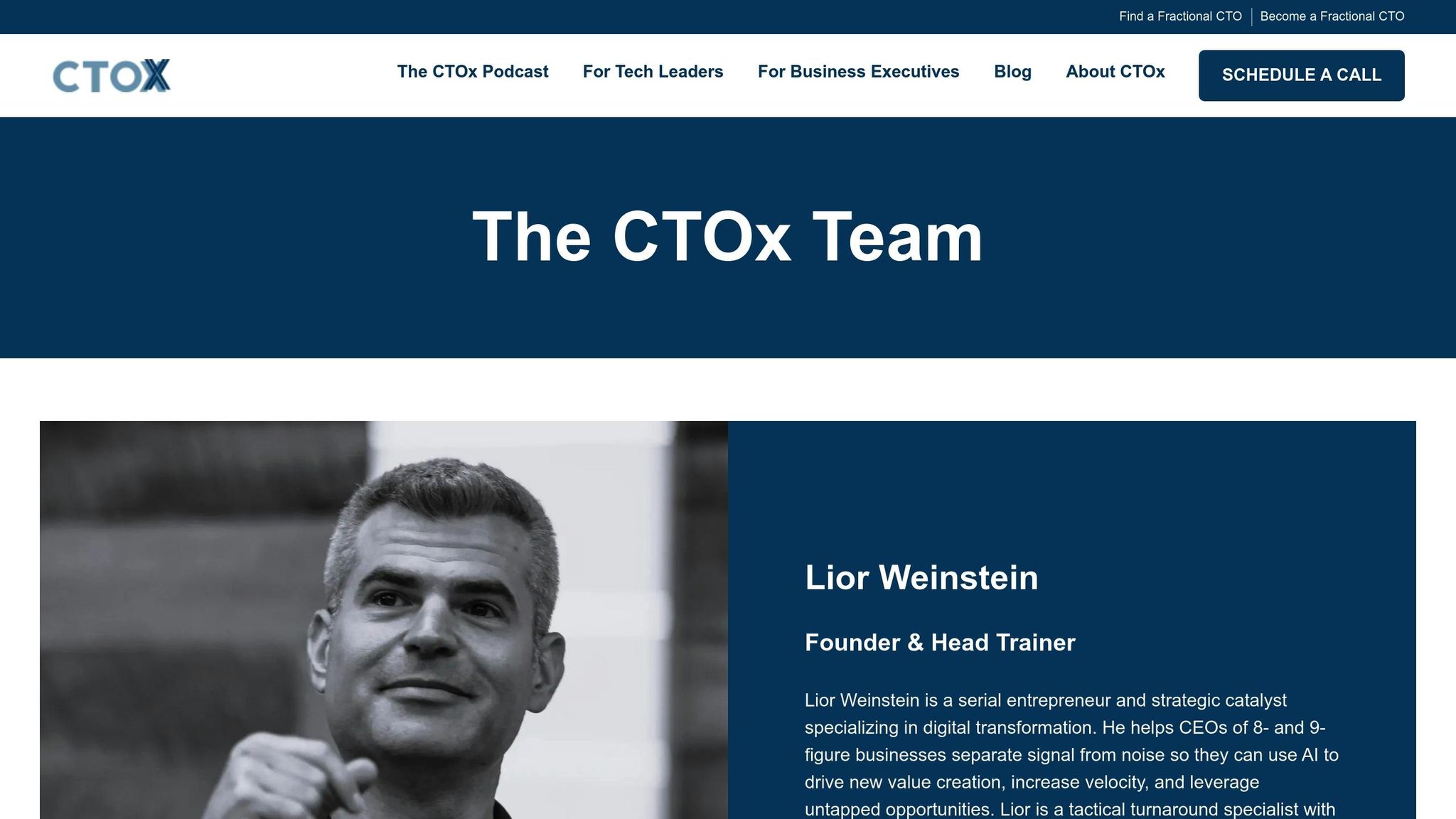
The Functional Technology™ Framework offers fractional CTOs a structured method for driving consistent, measurable results through collaboration. Created by Lior Weinstein, this framework organizes technology decision-making into three progressive phases, building on the collaborative techniques discussed earlier.
"Your ability to create predictable, measurable impact distinguishes you from every other technology consultant. Lior Weinstein’s Functional Technology™ Framework provides a systematic approach." – CTOx
Phase 1: Derisk
This phase focuses on identifying and addressing critical business risks. Fractional CTOs work with teams to uncover key dependencies, system vulnerabilities, operational bottlenecks, and security gaps. By addressing these risks collaboratively, they build trust while safeguarding the business from potential setbacks.
Phase 2: Unclog
Here, the goal is to eliminate constraints that hinder business growth. Teams work together to pinpoint inefficiencies, technical debt, and communication breakdowns that slow progress. This phase delivers noticeable improvements in operational speed and efficiency, creating momentum for larger projects.
Phase 3: Scale
The final phase involves designing scalable technology environments that support sustainable growth. This includes creating systems that evolve with the business, enabling teams to work more effectively and ensuring processes enhance rather than complicate operations.
The true power of this framework lies in its emphasis on collaboration. Instead of imposing solutions, fractional CTOs guide teams through structured discussions that build shared understanding and commitment. Each phase fosters trust and highlights value, making it easier to gain buy-in for future technology initiatives.
sbb-itb-4abdf47
Benefits of Fractional CTO-Led Collaboration
Once effective collaboration frameworks are in place, the advantages of having a fractional CTO at the helm become evident. By relying on fractional CTOs for key tech decisions, businesses gain access to strategic expertise, cost savings, and operational adaptability.
Fractional CTOs vs. Full-Time CTOs
The contrast between fractional and full-time CTOs is particularly apparent in their impact on collaborative decision-making:
| Aspect | Fractional CTO | Full-Time CTO |
|---|---|---|
| Cost Efficiency | High (Part-time engagement) | Low (Full-time salary and benefits) |
| Flexibility | High (Adaptable to business needs) | Low (Fixed role and commitments) |
| Access to Expertise | Immediate (Diverse, seasoned professionals) | Limited (Single professional’s expertise) |
| Strategic Alignment | Tailored and agile | Slower due to internal processes |
A fractional CTO provides high-level leadership at a fraction of the cost of a full-time executive. Their experience across industries brings fresh perspectives and proven strategies that in-house teams often lack. This combination of cost efficiency and external insight not only reduces expenses but also enables businesses to adapt quickly to changing needs.
Scalability and Tailored Guidance
One of the standout features of fractional CTOs is their ability to offer scalable leadership that evolves with the business. Unlike full-time executives who may struggle to stay fully engaged during slower periods or feel stretched thin in times of rapid growth, fractional CTOs adjust their involvement to suit the moment.
This flexibility is crucial during collaborative decision-making. For instance, when critical technology decisions arise, a fractional CTO can step in to lead intensive workshops and strategy sessions. Once those decisions are implemented, their role can scale back to periodic check-ins and progress updates.
CTOx fractional CTOs take a tailored approach, focusing on aligning technology strategies with broader business goals rather than getting bogged down in daily operations. This strategic focus ensures that collaboration stays centered on impactful decisions that drive measurable results.
With extensive experience working with businesses generating seven-figure revenues, fractional CTOs are adept at bridging the gap between technical teams and business stakeholders. They know how to apply the right collaboration models based on a company’s size, industry, and growth stage.
Risk Management and Exploring New Solutions
In addition to their scalability and tailored approach, fractional CTOs enhance decision-making by implementing effective risk management strategies. Their broad experience allows them to guide teams through structured risk assessments, identifying potential challenges before they escalate into major problems.
During collaborative discussions, fractional CTOs bring an outsider’s perspective, often spotting risks that internal teams might overlook due to familiarity with existing systems. This external viewpoint is especially valuable when evaluating new technologies or alternative approaches.
Fractional CTOs also excel at facilitating objective discussions about emerging tech solutions. Because they aren’t tied to legacy decisions or internal politics, they can present unbiased recommendations. They leverage insights from other organizations to suggest approaches that are both innovative and practical.
CTOx fractional CTOs focus on helping businesses maximize their tech investments while fostering innovation. Their collaborative methodology ensures that technology decisions align seamlessly with both technical requirements and business objectives. They also excel at guiding teams through tough conversations about legacy systems, tech debt, or major platform shifts, drawing on their experience with similar transitions. By maintaining a collaborative tone, they ensure all stakeholders are aligned and invested in the outcomes.
Best Practices for Collaborative Tech Decisions
Making sound technology decisions as a team requires deliberate effort and a clear framework. Fractional CTOs who excel in this area rely on structured methods to keep everyone on the same page, ensuring that teams are informed, engaged, and able to contribute effectively to key outcomes.
Setting Up Regular Check-Ins and Feedback Loops
Consistent communication is a cornerstone of successful collaboration. Fractional CTOs often set up a rhythm of weekly strategy meetings, bi-weekly team feedback sessions, and monthly reviews to track progress, address challenges, and fine-tune priorities. These meetings are guided by clear metrics, making it easier to assess where things stand.
One-on-one check-ins, held about two weeks into new initiatives, provide an opportunity to resolve misunderstandings early. These sessions help uncover gaps in knowledge, surface individual concerns, and allow for adjustments based on team input.
Monthly strategic reviews take a broader view, evaluating progress toward quarterly goals, considering market shifts that could impact decisions, and refining priorities as needed. By grounding these reviews in concrete data, fractional CTOs can clearly outline what’s working, what isn’t, and where adjustments are required.
To make feedback loops effective, it’s important to create multiple ways for team members to share their thoughts. Combining formal review processes with informal channels ensures that valuable insights reach decision-makers, regardless of communication styles or organizational structures.
These practices not only encourage collaboration but also give teams the clarity and authority needed to make decisions confidently.
Training and Empowering Tech Teams
Collaboration thrives when teams feel empowered. Fractional CTOs often bridge the gap between technical and business teams by organizing cross-functional training sessions. These sessions help technical staff better understand business goals while giving business leaders a clearer picture of the technical implications of their decisions.
Creating an environment where questions are welcomed and knowledge-sharing is encouraged fosters psychological safety. This openness forms the foundation for genuine collaboration.
Mentorship programs also play a key role. Pairing experienced team members with those still honing their collaborative skills helps build both technical expertise and communication abilities. Over time, this creates a culture where working together effectively becomes second nature.
Frameworks like DevOps and Agile are particularly useful for fostering teamwork and shared accountability. Practices such as daily stand-ups, sprint reviews, and retrospectives encourage teams to tackle roadblocks together and stay aligned on outcomes. These approaches distribute decision-making responsibilities, promoting a sense of ownership across the team.
Strong documentation and knowledge-sharing systems are essential for maintaining continuity. By capturing not just the decisions but also the reasoning behind them, fractional CTOs create a knowledge base that can guide future projects, even in the absence of key team members.
Finally, delegating decision-making authority where appropriate builds confidence and encourages growth. Fractional CTOs clearly define which decisions teams can handle independently and when escalation is necessary, striking a balance between autonomy and oversight.
Using CTOx Services
CTOx services are designed to put these collaborative principles into action, offering structured leadership tailored to business goals. Their tiered service models – ranging from weekly sessions to ongoing advisory support – help organizations streamline decision-making.
CTOx Engaged provides weekly strategic sessions that align technical teams and business stakeholders. These sessions cover technology strategy, team recruitment, and KPI tracking, ensuring everyone stays on the same page about progress and priorities.
For businesses needing quick, actionable outcomes, CTOx Half-Day Consults deliver intensive collaborative sessions. A preparation phase ensures stakeholders come ready with the right context and objectives, resulting in clear plans and shared roadmaps.
CTOx Advisor services offer ongoing support through sprint planning calls and unlimited email communication, maintaining collaboration between formal strategy sessions.
At the core of CTOx’s approach is the Functional Technology® Framework, which connects technology decisions directly to business objectives. This ensures that all stakeholders understand how technical choices impact broader goals.
By focusing on companies with annual revenues of $1 million or more, CTOx tailors its expertise to organizations with complex needs. Their fractional CTOs bring experience from multiple seven-figure businesses, adapting tried-and-true methods to fit specific industries and company cultures.
Additionally, the CTOx Accelerator program equips seasoned tech leaders with the skills needed for collaborative leadership. This program shifts their focus from day-to-day operations to strategic decision-making, ensuring that tech investments lead to measurable business outcomes. Together, these services and frameworks demonstrate how collaboration can scale with organizational complexity and drive meaningful results.
Conclusion: Aligning Tech Strategy with Business Goals Through Collaboration
Fractional CTOs play a pivotal role in reshaping how organizations make technology decisions by seamlessly blending technical know-how with business acumen. They bring a unique perspective – able to grasp the finer details of technology while keeping an eye on the broader business objectives. By fostering open communication, implementing clear frameworks, and empowering teams, they transform what might otherwise be isolated technical decisions into cohesive, business-driven strategies.
Their collaborative approach is not just about assembling capable teams; it’s about creating systems where technology and business work hand in hand. Technical insights shape business strategies, while business objectives guide technical execution. This alignment is achieved through consistent communication, cross-functional training, and frameworks that tie every technical choice to tangible business outcomes. Such an approach ensures that as organizations grow, their collaboration systems grow with them, fostering a scalable and integrated decision-making process.
What distinguishes exceptional fractional CTOs is their ability to adapt this collaborative model as companies scale. They establish processes that remain effective whether the organization has a small team of 10 or a workforce of 100. This ensures that decisions are inclusive, strategic, and forward-thinking rather than reactive or fragmented. Their strategies are tailored to meet the evolving needs of businesses, enabling them to stay agile in a dynamic environment.
Services like CTOx further amplify this collaborative leadership by offering businesses access to experienced fractional CTOs on a flexible basis. This allows organizations to align their technology investments with growth objectives without committing to a full-time hire, delivering the strategic expertise they need when they need it.
Ultimately, this approach lays the groundwork for truly collaborative decision-making. It ensures that all stakeholders not only understand the technical choices being made but also recognize their importance to the organization’s success.
When technology strategies and business goals align through collaboration, organizations go beyond solving problems – they gain a competitive edge. By merging technical expertise with strategic business insights, companies position themselves for sustained growth and long-term success.
FAQs
How do fractional CTOs help technical and business teams work better together?
Fractional CTOs play a key role in bridging the gap between technical teams and business stakeholders. They take complex technical ideas and translate them into straightforward, actionable insights that are easy for non-technical team members to grasp. This way, everyone stays aligned and focused on common objectives.
They also promote collaboration by aligning technology initiatives with business goals, encouraging open dialogue, and fostering an environment where both technical and business voices are valued. Their knack for resolving conflicts and mediating between teams helps ensure smoother decision-making and stronger teamwork across the board.
What are the main advantages of hiring a fractional CTO instead of a full-time CTO?
Hiring a fractional CTO can be a smart move for businesses looking to save money and stay flexible. Unlike bringing on a full-time CTO, hiring a fractional CTO means you avoid the costs of a full salary, benefits, and other overhead expenses. It’s a more budget-friendly way to access high-level expertise.
What’s more, fractional CTOs offer expertise when you need it, giving businesses the ability to adjust their tech leadership based on specific projects or growth phases. This can be a game-changer for startups and small to mid-sized businesses that need strategic guidance but aren’t ready to commit to a full-time executive.
How does the Functional Technology™ Framework help fractional CTOs make better tech decisions collaboratively?
The Functional Technology™ Framework provides fractional CTOs with a clear, structured approach built around three key pillars: Derisk, Unclog, Scale. This framework is designed to support collaborative decision-making by helping fractional CTOs minimize risks, clear technical bottlenecks, and align technology strategies with overarching business objectives.
By promoting transparency and fostering trust among stakeholders, this approach ensures that decisions are cohesive and effective. It enables businesses to get the most out of their tech investments, encourages innovation, and drives steady growth – all while keeping strategic priorities front and center.